In most network deployments, generated MAC addresses are appropriate. However, you might need to set a static MAC address for a virtual network adapter.
The following examples show when you might set a static MAC address.
■ | You want to ensure that a virtual network adapter always has the same MAC address. |
By default, VMware uses the Organizationally Unique Identifier (OUI) 00:50:56 for manually generated addresses, but all unique manually generated addresses are supported.
If you choose to use the VMware OUI, part of the range has been partitioned for use by vCenter Server , host physical NICs, virtual NICs, and future use.
You can set a static MAC address using the VMware OUI prefix by adding the following line to a virtual machine‘s configuration file:
In the example, <number> refers to the number of the Ethernet adapter, XX is a valid hexadecimal number between 00 and 3F, and YY and ZZ are valid hexadecimal numbers between 00 and FF. The value for XX cannot be greater than 3F to avoid conflict with MAC addresses that are generated by the VMware Workstation and VMware Server products. The maximum value for a manually generated MAC address is shown in the sample.
You must also set the address type in a virtual machine’s configuration file.
Because ESXi virtual machines do not support arbitrary MAC addresses, you must use the example format. Choose a unique value for XX:YY:ZZ among your hard-coded addresses to avoid conflicts between the automatically assigned MAC addresses and the manually assigned ones.
It is your responsibility to to ensure that no other non-VMware devices use addresses assigned to VMware components. For example, you might have physical servers in the same subnet, which use 11:11:11:11:11:11, 22:22:22:22:22:22 as static MAC addresses. Since the physical servers do not belong to the vCenter Server inventory, vCenter Server is not able to check for address collision.
By default, most computers and devices on the network get their IP addresses via DHCP. DHCP is basically a system whereby a host, like a router or server, gives out IP addresses to devices so that they can communicate with the host and with each other over the network.
When your Mac is connected to a private network in a home or office, it's probably assigned what's known as a dynamic IP address. (To check, see How to Find Your Mac's IP Address.)That's not a problem for the majority of users - most people don't care whether their IP addresses changes or not.
Each device on the network has to have a unique IP address. The IP address for a device may change over time depending on several factors. This usually doesn’t cause any problem, but there are situations where a static IP address is required.
For example, if your computer is being used as a media server in your home, you might want the IP address to remain the same if you have to connect to the computer via its IP address. In other instances, you need to change the IP address to match the subnet of another device so that you can connect and configure it. There are two ways to set a static IP address on a device.
One way that I’ve already written about is logging into your router and reserving an IP address for a particular device. The advantage to this method is that all the changes are being made in one location, so it’s easy to see which devices have static IP addresses and what the addresses are. Also, you can easily assign static IP addresses to Windows, Mac, Linux machines or any other device easily.
The disadvantage to this method is that it requires logging into your router, which isn’t the easiest thing to do for some non-techie folks. Secondly, figuring out how to assign static IP addresses on routers can be complicated and there is no one way to do it.
The second way to assign a static IP address is to change the settings on the device itself. The advantage here is that the process is a little bit more straight-forward, but the downside is that each device might have a different method for assigning a static IP.
Either method will work, so choose whichever option is more convenient. This article will explain the second method, but only for Windows and OS X.
Note: When assigning a static IP address, be sure you are not choosing an IP that is in the DHCP range, otherwise you might get a message about an IP address conflict, which is what happens when two devices have the same IP address on the network.
The best way to avoid this conflict is to log into your router or whichever device is acting as the DHCP server and change the IP address distribution start address.
If you start the address at something like .10 or .11, then you’ll have several IP addresses free that you can use to assign as static IPs. It’s a little complicated, so I only suggest this option for someone who knows what they are doing.
Assign Static IP Address – Windows
The following procedure will work for Windows 7, Windows 8 or Windows 10. The first thing we want to do is to open the Network and Sharing Center. You can do that by clicking on the Start button and typing in network and sharing.
In the Network and Sharing Center window, click on Change adapter settings on the left-hand side.
This will open the Network Connections window where you will see a list of all physical and virtual network devices. Here you will want to right-click on the network connection that is currently being used to connect the computer to the network and choose Properties. If it’s WiFi, use Wireless Network Connection. If you are connecting via cable, use Ethernet.
Now click on Internet Protocol Version 4 (TCP/IPv4) to select it and then click on Properties again.
Finally, this will bring you to the settings screen where you can assign a static IP address.
You’ll select the Use the following IP address radio button and then type in the IP address, subnet mask and default gateway. By default, when you type in the IP address, it fills out the subnet mask for you. The Default gateway and Preferred DNS server should both be set to the IP address of your router.
I would also check the Validate settings upon exit box to make sure that the new values will work on your network. Click OK and your computer will now have a static IP address assigned to it.
Assign Static IP Address – Mac (OS X)
If you’re using a Mac, you have to go to System Preferences, which is basically the equivalent of Control Panel in Windows. To get there, click on the Apple icon at the top left of the menu bar.
Next, click on the Network icon.
Manually Assign Ip Address Mac
This screen is similar to the Network Connections dialog in Windows. You will see a list of network connections on the left. If the connection is green, that means it is active. Click on the connection and then click on the Advanced button at the bottom right.
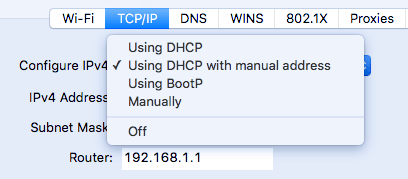
This will bring up all the advanced settings for the network connection. Click on the TCP/IP tab and you’ll see a dropdown next to Configure IPv4.
Manually Assign Ip Address Mac Free
In the dropdown, you have several choices: Using DHCP, Using DHCP with manual address, Using BootP, Manually and Off. In OS X, you can choose from either DHCP with manual address or Manually. Manually is basically like the default option in Windows where you have to type in all the values yourself. DHCP with manual address will allow you to type in an IP address, but will automatically determine the subnet mask and router (default gateway).
Even though it looks fairly complicated, changing the IP address for your computer is a simple task. The harder part is knowing what IP address to use so that you don’t run into any conflicts, but can connect to the network at the same time. If you have any questions, feel free to comment. Enjoy!